Stars Shape Halftone Background 50-6: A Designer's Guide to Visual Texture and Workflow Integration
In visual design, background selection is rarely just an aesthetic choice. A well-chosen texture or pattern can shape how users interpret content, guide attention across a layout, and reduce the cognitive load of processing information. The Stars Shape Halftone Background 50-6 belongs to a category of assets that sit at the intersection of decorative appeal and functional design. It's a resource built not just to fill space, but to solve a specific creative problem: how to introduce depth, rhythm, and thematic cohesion without overwhelming the primary message.
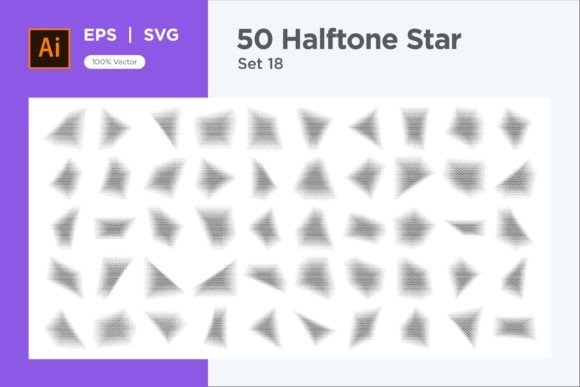
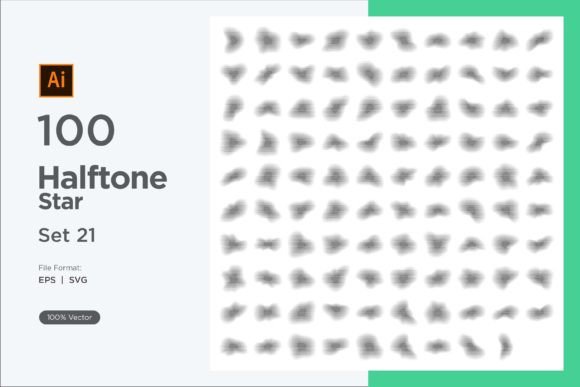
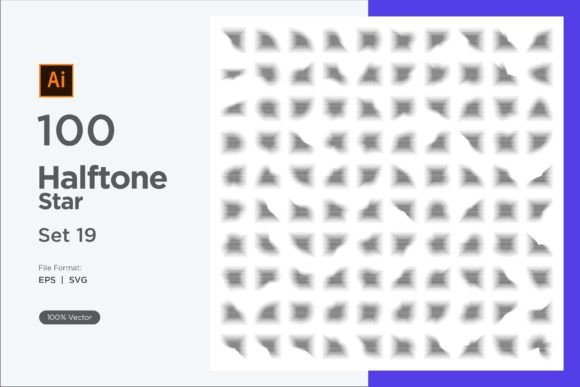
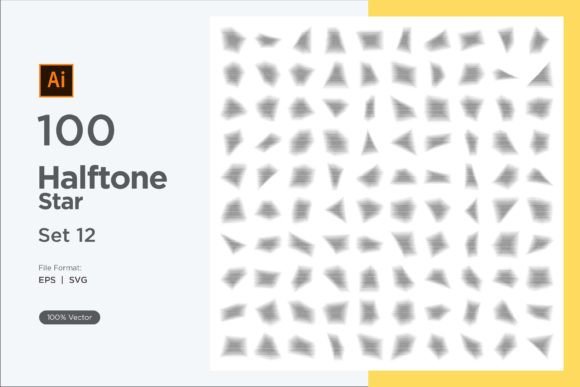
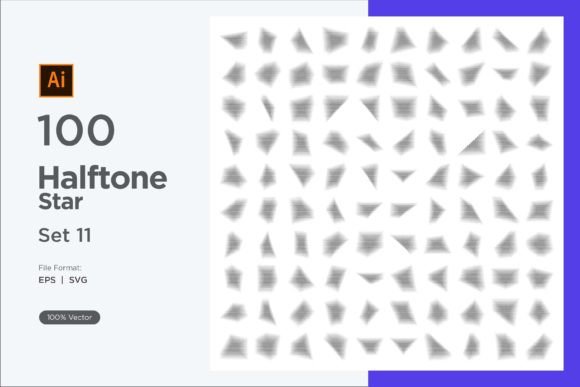
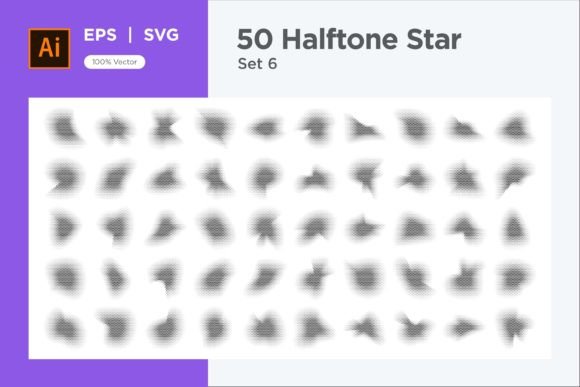
This collection includes 50 EPS and 50 SVG files, each featuring star shapes arranged in halftone patterns. The stars themselves act as the structural unit, while the halftone treatment layers in gradients or dot-based shading that creates the illusion of tone variation. The result is a textured, dimensional surface that can serve as a backdrop for posters, digital interfaces, packaging mockups, social media graphics, or editorial layouts. But what makes this particular asset worth integrating into a broader design workflow is how it behaves across tools, how easily it adapts to different color treatments, and how consistently it performs across both print and digital environments.
Understanding the Halftone Technique with Star Shapes
Halftone effects originated in print reproduction, where varying dot sizes simulated continuous-tone imagery using a single ink color. In a modern design context, halftone techniques have been repurposed for their retro, editorial, or high-contrast aesthetic qualities. When applied to star shapes rather than standard circles, the halftone method produces something visually distinct. The stars create a field of repeating geometry that reads as both orderly and expressive. Depending on scaling, the effect can evoke celestial themes, vintage comic book textures, or playful retro gaming visuals.
What separates the Stars Shape Halftone Background 50-6 from manually constructed halftone patterns is that each file arrives pre-constructed and fully editable. The halftone dots within the stars are not rasterized, flattened design elements. They exist as vector paths, which means designers can open any EPS or SVG file and immediately adjust stroke weights, fill colors, gradient stops, or transparency modes. This level of editability is crucial in professional environments where a background asset may need to match shifting brand guidelines, campaign themes, or client revisions on short notice.
Where This Asset Fits in a Project Lifecycle
Background assets often enter a project at a specific stage—usually after core layout decisions have been made but before final polish. Designers who adopt the Stars Shape Halftone Background 50-6 typically reach for it during the visual development phase, where mood, texture, and atmosphere are being tested against content hierarchy. However, there are several distinct moments across a project lifecycle where a pre-built halftone star background proves useful.
During Concept Exploration and Mood Board Creation
Before committing to full layouts, many designers assemble quick visual directions using mood boards. At this stage, speed matters more than precision. Having a library of ready-to-use vector backgrounds eliminates the need to build decorative textures from scratch. A designer can pull one of the 50 variations, drop it behind some placeholder typography, and instantly assess whether the celestial or retro direction holds promise. The halftone texture introduces enough complexity to simulate a finished look without requiring custom illustration work.
In Layout Production and Iteration
Once a concept is approved, the real work of scaling and refining begins. Here, the SVG format proves especially useful for web and UI projects. SVG files remain resolution-independent and lightweight, which matters for site performance. A designer working on a hero section for a landing page can embed an SVG background without worrying about pixelation on high-DPI displays. Meanwhile, the EPS format serves print designers who need to scale artwork to billboard dimensions or integrate it into packaging dielines without loss of fidelity.
Color adjustment becomes a key workflow consideration at this stage. Because the files are vector-based, changing the color of an entire star pattern to match a brand palette is a matter of selecting a group and applying a new fill. Designers working in Adobe Illustrator or Affinity Designer can also apply gradient fills across the halftone dots to create lighting effects—darker at the edges, lighter in the center, or vice versa—which adds spatial depth to otherwise flat compositions.
For Final Polish and Client Presentation
When a project nears completion, small details make the difference between a design that feels generic and one that feels considered. The Stars Shape Halftone Background 50-6 works as a finishing layer that can be applied subtly beneath content sections, within packaging windows, or as a secondary texture in brand collateral. Because the halftone effect already carries a sense of craft and intentionality, it communicates that a design has been fully resolved, not simply assembled.
Real-World Use Cases Across Creative Disciplines
This asset isn't confined to a single type of project. Its versatility comes from the neutrality of the star shape combined with the expressive quality of the halftone rendering. Different use cases demand different approaches to scale, opacity, and color treatment.
Print Design and Packaging
Packaging designers often need backgrounds that feel tactile and premium without competing with product photography. A halftone star pattern printed in a metallic ink or embossed onto a box surface can elevate the unboxing experience. Because the star shapes are geometric and repeatable, they align well with structured packaging grids. The EPS files retain clean edges that print separators and plate makers can process without artifacts.
Digital Product Interfaces and Web Design
UI designers use textured backgrounds sparingly to avoid visual noise, but certain sections benefit from controlled pattern application. A login screen, a 404 page, or an empty state illustration gains personality when a subtle star halftone background sits behind the content. The SVG format integrates directly into code, and developers can animate the opacity or color of the background using CSS or JavaScript, opening up interactive design possibilities.
Social Media Content and Marketing Campaigns
Marketers and social media managers frequently produce high volumes of visual content under tight deadlines. Having a consistent background asset like the Stars Shape Halftone Background 50-6 helps maintain visual cohesion across a campaign. One variation can serve as the backdrop for quote graphics, another for promotional announcements, and a third for event reminders—all unified by the same halftone star language. The ease of color-swapping means the series can adapt to seasonal campaigns without breaking brand continuity.
Motion Graphics and Video Production
Motion designers working in After Effects or similar tools can import the SVG or EPS files and use them as base layers for animated backgrounds. The star shapes can be masked, scaled, or rotated over time to create subtle parallax effects. Because the halftone texture already implies motion—dots varying in size suggest a waveform or shimmer—the transition from static to animated is natural and visually satisfying.
Integrating Halftone Star Backgrounds with Other Design Tools and Resources
No design asset operates in isolation. The Stars Shape Halftone Background 50-6 interacts with typography systems, color palettes, icon sets, photography, and layout grids. Understanding these interactions helps designers avoid the common pitfall of dropping a textured background into a layout and hoping it works.
When layered with photographs, the halftone background benefits from reduced opacity or blending mode adjustments. Overlay or soft light blends often produce the most integrated results, allowing image content to show through while the star pattern adds texture. With typography, contrast becomes the primary concern. Light text over a halftone pattern may suffer legibility issues if the dot density is too high in certain areas. A practical safeguard is to add a semi-transparent color block behind text elements, preserving readability while retaining the background's atmospheric quality.
The asset also complements other vector illustration work. Designers who build custom icon sets or illustrated characters can place them over the star background to create cohesive scene compositions. The geometric nature of the stars pairs well with flat illustration styles, while the halftone shading bridges the gap between flat and textured approaches.
Organization Tips for Long-Term Asset Management
Receiving 50 EPS and 50 SVG files is valuable, but only if those files remain accessible and searchable when needed. Without a basic organization strategy, designers may find themselves re-downloading or re-purchasing assets they already own. A practical approach involves tagging files with descriptive keywords such as halftone, star pattern, celestial texture, or retro background within the file browser or using a digital asset management tool.
Naming conventions also matter. Renaming files from generic numerical sequences to something like stars-halftone-dense-purple.svg or stars-halftone-scattered-blue.eps speeds up retrieval during time-sensitive projects. For teams, storing the collection on a shared drive with preview thumbnails generated from the SVG files allows non-design teammates to browse and request specific variations without opening vector software.
Quality Control and Consistency Across Applications
One advantage of using a unified asset pack is consistency. All 50 variations share the same underlying construction method, which means a design system built around one star halftone background can easily incorporate another from the same set without visual mismatch. This consistency supports brand work, where repeated use of a cohesive set of backgrounds strengthens visual identity over time.
Quality control extends to file integrity as well. The EPS and SVG formats included in the Stars Shape Halftone Background 50-6 are built to scale infinitely, but designers should still test files in their target software environment early in the process. Importing an EPS into an older version of vector software may occasionally cause gradient or transparency flattening. Testing during the asset selection phase prevents surprises later. If issues arise, the dual-format inclusion means an SVG version is typically available as a fallback that renders consistently in modern applications.
Customization Without Compromising the Original Design
Editing halftone patterns can be intimidating for designers who haven't worked extensively with complex vector constructions. The good news is that modifying the Stars Shape Halftone Background 50-6 does not require breaking apart the pattern logic. Most color edits can be applied globally using selection tools. Adjusting the spacing or density of stars takes more effort but is achievable by scaling the pattern within a clipping mask or adjusting the artboard dimensions.
For designers who want to deconstruct and learn from the halftone technique, examining the EPS files in outline mode reveals how the dot patterns are structured. This can serve as an educational exercise for those learning to build their own custom halftone effects. The asset thus functions not only as a production resource but also as a reference for understanding vector shading techniques.
Making This Background Part of a Reusable Design System
Frequent creators benefit from building personal design systems—collections of reusable components, styles, and assets that accelerate future work. Adding the Stars Shape Halftone Background 50-6 to such a system means that whenever a project calls for a textured, starry, or retro-tinged background, the designer doesn't start from scratch or search stock sites. The asset is already available, tested, and familiar.
To integrate it into a reusable system, consider pre-setting a few color variations that match commonly used brand palettes. Save these as separate files or as layer comps within design software. Similarly, prepare a few opacity and blending variants pre-tested with sample typography and imagery. This upfront investment reduces decision fatigue during future projects and ensures the asset remains a productive tool rather than an unused file in a folder.
Support and Troubleshooting for Smooth Adoption
Even the most straightforward design assets can generate questions during initial use—how to open a specific file format, why colors appear differently across applications, or how to isolate a particular variation for a specific use case. The creator of the Stars Shape Halftone Background 50-6 offers direct support through their profile page or email, which is a practical resource for resolving format-specific issues quickly. This kind of creator accessibility matters in professional workflows where project timelines don't allow for prolonged troubleshooting.
The combination of 50 EPS files and 50 SVG files in a single package also means designers have redundancy built in. If one format behaves unexpectedly in a particular software environment, the other format typically provides a clean alternative. This dual-format delivery reflects an understanding of how creative professionals actually work—moving between multiple tools, collaborating across disciplines, and needing assets that perform reliably regardless of where they land.