Unlocking Creativity: How a Children's Game Design Handbook Sparks Digital Imagination
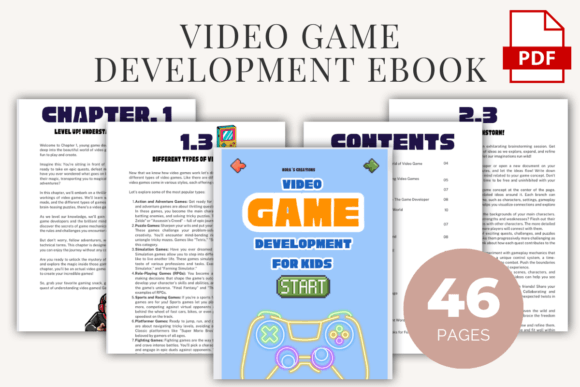
For generations, children have been captivated by the magic of video games. The flashing screens, the epic adventures, and the sense of control over a digital world provide endless entertainment. Yet, for many young players, the experience stops at the controller. A growing number of educational resources, however, are aiming to bridge that gap, transforming passive consumers into active creators. One such resource is a specialized handbook designed to teach kids the art and science of video game development. This isn't a dense technical manual; it's an invitation. By offering clear, step-by-step guidance in an accessible format, these books empower the next generation to not just play games, but to build them.
The Shift from Player to Creator: Why Game Design Matters for Kids
The idea of a child designing a video game might seem ambitious, but it aligns perfectly with modern educational goals. In today's world, digital literacy goes beyond knowing how to use software; it encompasses understanding how software is made. Learning game development introduces core concepts of computational thinking, logical problem-solving, and sequential planning. More profoundly, it merges left-brain logic with right-brain creativity. A child sketching a character concept is practicing art. A child deciding how that character moves when the spacebar is pressed is practicing logic. This handbook serves as the conduit for that merger, promising that no prior coding or artistic skills are needed—only curiosity and a spark of creativity. This approach demystifies a field often perceived as exclusive, making it accessible to any child with a passion for gaming.
Beyond the Screen: The Real-World Skills Hidden in Game Design
The process of creating a video game, even a simple one, is a project-based learning endeavor. It teaches skills with direct practical relevance in school, future work, and daily life. Firstly, it reinforces structured thinking. A game must be planned. What is the goal? What are the rules? What happens when you win? Answering these questions requires clear, organized thought. Secondly, it fosters persistence and iterative design. Game elements rarely work perfectly the first time. A puzzle might be too easy, a jump might be too high. Learning to test, adjust, and improve is a lesson in resilience. Finally, it encourages systemic understanding. Children begin to see the games they play not as monolithic wholes, but as interconnected systems: artwork, sound, rules, and code. This handbook, through its guided activities, makes these abstract skills tangible and fun.
A Guided Journey Inside the Handbook: From Curiosity to Competence
The structure of such a resource is critical to its success. Aimed at children aged 8 to 12, the content must be engaging, visual, and broken into digestible segments. Typically, it begins with a foundational introduction, welcoming the reader to the world of game development. This section likely sets the tone, reassuring the child that they are embarking on an adventure of creation.
Chapter Breakdown: Building Knowledge Step-by-Step
The first chapter often focuses on understanding video games. This is a vital step that clarifies common assumptions. It's not about complex programming languages right away; it's about deconstructing what a game actually is. Kids learn to identify core components like characters, objectives, environments, and rules. Subsequent chapters then build on this foundation. The book might guide them through:
- The Art of Game Design: Conceptualizing a story or a world. What makes an adventure thrilling? What makes a puzzle challenging?
- Creating Basic Mechanics: Using simple tools or metaphors to explain how objects interact, like gravity, collision, or scoring.
- Hands-On Activities: Interactive exercises that could involve drawing level maps, writing simple storyboards for game sequences, or using beginner-friendly software interfaces.
- Bringing It All Together: The final goal is synthesis—transforming scattered imaginative ideas into a coherent, playable project plan.
This logical progression ensures that complex concepts are demystified, aligning with the Helpful Content principle of providing a complete, satisfying learning path.
The Significance of Accessibility: No Barriers to Entry
A key promise of this educational model is that it requires no prior specialized skills. This is profoundly significant. In many fields, the initial learning curve can deter budding interest. By removing that barrier, the handbook ensures that a child's interest in games—a nearly universal childhood experience—can directly fuel a educational and creative pursuit. The language is clear and easy-to-understand. Complex ideas are broken down using analogies and relatable examples. For instance, game logic might be compared to the rules of a board game they already know. This method builds confidence, allowing the child to feel that the domain of "game developer" is not a distant profession, but a role they can step into today.
Connecting to Professional Practice
While simplified, the techniques introduced often mirror the workflows of professional game developers. Children gain insights into the iterative design process, the importance of testing, and the balance between creativity and technical constraints. This early exposure can shape future educational interests, potentially steering them towards STEM fields, digital arts, or storytelling. It shows them that the games they admire are made by people who followed a process—a process they can now start to learn.
Modern Relevance: Game Design in Education, Creativity, and Technology
This topic fits seamlessly into contemporary discussions about education and technology. Schools are increasingly integrating coding and digital creation into curricula. A handbook like this serves as a perfect supplementary tool, promoting self-directed learning and digital literacy at home. In the realm of creativity, it legitimizes video games as a medium for artistic expression, much like writing or painting. For technology, it provides a gentle, engaging on-ramp to understanding how software functions, which is a fundamental aspect of modern life. The instant-download, printable PDF format mentioned in such product descriptions also speaks to modern practicality, allowing for immediate access and flexible use—on a tablet, a computer, or as a physical booklet.
Clarifying Common Misunderstandings
Two major assumptions often surround kids and game development. The first is that it's too hard. This resource directly counters that by structuring everything from the ground up. The second is that it's solely about coding. While coding is a part of professional game development, the foundational creative and design stages are separate and equally important. This handbook wisely focuses on those foundational stages—the design, the planning, the artistic conceptualization. It empowers children to understand the whole picture, building a broader understanding that coding is just one tool in a larger creative toolbox.
Conclusion: Equipping the Next Generation of Digital Innovators
A handbook that teaches children how to make video games is more than just a book; it's a catalyst. It takes a ubiquitous childhood interest and channels it into learning, creativity, and skill development. By providing structured guidance, interactive exercises, and demystifying professional techniques, it transforms curiosity into capability. It aligns with E-E-A-T principles by demonstrating experience in educational design and establishing authority on making a complex topic accessible. Ultimately, it helps children see the digital world not as a fixed landscape to explore, but as a canvas they can shape. The final output—the skills and knowledge to transform imaginative ideas into playable concepts—is not just about building games. It's about building confidence, competence, and a creator's mindset that will serve them far beyond the digital realm.