The Strategic Power of a Zeus Logo in Modern Brand Identity
Visual identity shapes how audiences connect with a team, a brand, or a community before a single word is exchanged. In competitive spaces like esports, gaming, and sports clubs, the emblem that represents a group carries symbolic weight. A Zeus logo taps into one of the most enduring archetypes in human storytelling—authority, thunderous strength, and unquestionable leadership. For designers, team captains, and brand managers looking to build recognition quickly, the mythological resonance of Zeus offers a shortcut to meaning that purely abstract marks often struggle to achieve.
The appeal goes beyond mythology enthusiasts. A well-crafted Zeus mascot logo communicates dominance, strategic intelligence, and the kind of primal energy that energizes both players and fans. Whether printed on jerseys, rendered in animated streams, or etched into merchandise, the iconography of the thunder god creates instant emotional stakes. This article unpacks what makes these designs so relevant, how they fit into current design and branding trends, and what practical steps creators can take to maximize their impact.
Why a Zeus Mascot Logo Resonates in Esports and Gaming
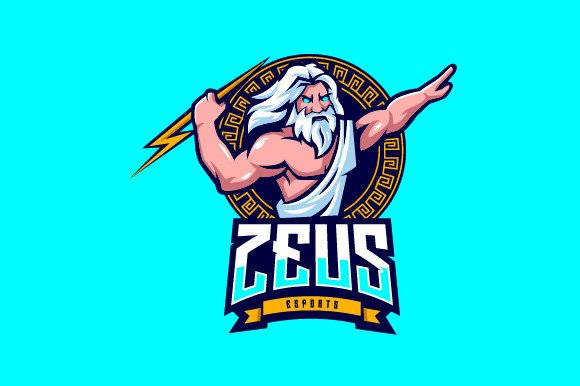
Esports organizations live and die by their visual distinctiveness. Unlike traditional sports franchises that inherit decades of local loyalty, competitive gaming teams must construct identity from scratch in a crowded, global marketplace. A Zeus mascot logo solves a fundamental branding problem: it gives viewers a clear personality to root for. The bearded, lightning-wielding figure suggests a team that plays aggressively, controls the tempo, and strikes when it matters most.
Viewers scrolling through tournament brackets or browsing streaming channels make split-second judgments. Research into visual processing consistently shows that faces and humanoid figures capture attention faster than abstract shapes. A Zeus mascot leverages this cognitive bias. The face, the bolt, the flowing beard—these elements register quickly and linger in memory. For organizations competing for sponsorship deals and audience loyalty, that memorability translates into tangible business outcomes.
The gaming community also rewards authenticity and thematic depth. A logo that references Greek mythology doesn't just look impressive; it invites storytelling. Casters can reference the "thunder from Olympus" during highlight reels. Social media managers can weave mythological language into victory posts. Fans can adopt the persona. The logo becomes a narrative engine, not just a static asset.
The Shift Away from Generic Esports Emblems
The early wave of esports branding leaned heavily on aggressive animal mascots—wolves, eagles, dragons—and angular, techy wordmarks. While those elements still have their place, the landscape has matured. Organizations now seek differentiation through deeper symbolic language. A Zeus logo belongs to this emerging tier of thoughtful design, where the emblem carries layered meaning beyond surface-level intimidation.
This shift reflects broader changes in how audiences consume competitive entertainment. Fans follow players across platforms, engage with behind-the-scenes content, and expect brands to exhibit personality. A generic emblem with no story behind it feels hollow in this environment. By contrast, a Zeus mascot offers a recognizable character that can evolve across seasons, appear in animated content, and anchor merchandise collections. The mythology provides a narrative backbone that creative teams can mine indefinitely.
Designers working on these projects note that client briefs increasingly ask for mascots with "character" and "backstory potential." The Zeus archetype delivers both without requiring extensive audience education. Most potential viewers across cultures recognize the thunder god's silhouette and attributes, making it a globally functional choice for teams competing in international tournaments.
Practical Design Considerations for Zeus Logos
Creating an effective Zeus mascot requires balancing mythological authenticity with modern aesthetic sensibilities. The classic depictions of Zeus—full beard, mature features, lightning bolt in hand—provide a strong foundation, but successful esports adaptations often introduce stylized elements. Angular, geometric linework suits the digital environment. A restricted color palette ensures the logo reproduces cleanly across small and large formats, from mobile screens to arena banners.
File format versatility matters enormously in production workflows. Designers and brand managers need assets that function across everything from embroidery to video overlays. This is where the availability of EPS10 formats and JPG files becomes critical. Vector formats preserve clean edges at any scale, while raster versions provide immediate usability for social media and web applications. When a logo pack includes both, creative teams gain flexibility without needing to rebuild or convert assets under tight deadlines.
Color adaptability represents another practical consideration that experienced designers prioritize. A team might debut with a navy and gold palette, then shift to black and electric blue for a special tournament run. Logos structured with easy-to-change colors—through well-organized layers and non-destructive editing—empower rapid rebranding without the expense of commissioning new work. For smaller clubs and grassroots esports organizations, this cost efficiency makes the difference between looking polished and looking improvised.
How the Zeus Mascot Fits into Merchandise and Fan Culture
Merchandise transforms a logo from an intellectual exercise into a revenue stream. Fans want to wear their allegiance, and a compelling mascot design drives apparel sales, sticker purchases, and all the physical touchpoints that deepen community bonds. A Zeus mascot printed on a hoodie or emblazoned on a phone case carries symbolic weight that abstract marks rarely match. The wearer isn't just supporting a team; they're embodying the thunder god's attributes.
The rise of limited-edition merchandise drops in gaming cultures amplifies this dynamic. Organizations can release "Olympian Collection" apparel, "Thunder Strike" jerseys, or seasonal variants that reinterpret the Zeus figure. Because the mascot is inherently flexible—a character rather than a rigid symbol—designers can explore different poses, expressions, and color treatments while maintaining brand continuity. The 100 editable nature of well-organized vector files supports this iterative creative process, allowing quick adaptations without starting from scratch each time.
This approach mirrors strategies employed by major sports franchises that have developed mascot systems around iconic figures. The difference lies in the mythological gravitas. A generic animal mascot can feel juvenile; Zeus carries weight across age demographics. Adult fans feel comfortable displaying the emblem in professional contexts, and the classical art associations elevate the design above typical gaming merchandise.
Sports Clubs and Broader Applications Beyond Gaming
While esports and gaming represent the most visible adopters, Zeus logos serve a wide range of organizations. Local sports clubs, fitness brands, competitive debate teams, and even corporate divisions seeking internal identity symbols have embraced mythological mascots. The thunder god's association with strength, authority, and decisive action translates across contexts. A youth soccer club named the Olympians gains a visual anchor that parents instantly recognize and that young players find aspirational.
The design needs for these varied applications differ subtly from pure esports use. Athletic clubs may prefer a more athletic, dynamic pose. Corporate uses might lean toward a more restrained, emblematic treatment. Fitness brands could emphasize musculature and motion. Having access to extensively editable source files—characterized by the 100 editable features some vector packs include—allows designers to tailor the mascot's personality without altering core identity elements. What reads as aggressive on a gaming jersey might need to read as authoritative on a coaching website.
Educational institutions exploring classical themes for their programs also find value in these designs. A classics department hosting a lecture series, a debate society adopting Olympian imagery, or a school house system naming divisions after Greek gods all benefit from visually polished, professionally constructed logo assets that would cost significantly more to commission from scratch.
The Role of Editable Vector Graphics in Modern Workflows
The practical reality of contemporary design work demands flexibility. Static, uneditable logo files create bottlenecks every time a new format, color variation, or composition arises. Designers working across media—print, digital, environmental—need the ability to isolate elements, adjust stroke weights, recolor sections, and export at precise specifications. EPS10 vector formats provide this foundation because they preserve paths, layers, and editable text elements in widely compatible structures.
For team managers and small business owners who handle their own branding, the ability to easily change colors without specialized training proves essential. A logo designed with clearly separated, logically named layers can be recolored in minutes by someone with basic software literacy. This independence reduces reliance on external designers for routine updates and accelerates the production of tournament-specific or event-specific variants. The Zeus mascot might appear in standard team colors for league play, then shift to a monochromatic treatment for a charity event, then adopt high-contrast neon for a late-night streaming overlay—all from the same master file.
This editable structure also extends the asset's lifespan. Brand identities evolve, and a logo built for easy modification accommodates gradual refinement rather than abrupt, costly redesigns. Teams that start with bold, saturated palettes can mature into more subdued, metallic treatments over years of competition without abandoning the mascot their fans have come to love.
Why Craft and Attention to Detail Separate Effective Mascots from Generic Clip Art
Not all Zeus mascot illustrations achieve the same results. The difference between a professional-grade logo and something that looks like clip art lies in several specific craft decisions. Line weight consistency, anatomically coherent proportions, balanced negative space, and thoughtful simplification for small-scale reproduction all contribute to a design that performs across applications. Mascots that overcomplicate facial features or rely on excessive gradients often fail at reduced sizes—exactly the sizes where most digital logos appear in tournament brackets and social media avatars.
Professional vector construction also enables downstream editing without artifacts or degradation. When paths are cleanly closed, nodes are placed efficiently, and shapes overlap logically, designers can modify poses, adjust expressions, or extract individual elements without hours of cleanup work. The 100 editable designation on well-constructed packs signals this level of professional consideration. It means the designer who created the asset built it for real production environments, not just for portfolio display.
For those browsing creative marketplaces and evaluating options, these structural qualities matter more than initial visual impression. A stunning illustration that can't be recolored, scaled, or edited without breaking apart costs more in frustration and wasted time than it saves in purchase price. Checking file specifications, reviewing available formats, and confirming layer organization before committing saves significant headaches later.
Naming, Narrative, and the Power of Thematic Cohesion
A Zeus mascot logo works hardest when the organization fully commits to the theme. Team names like "Olympus Rising," "Thunderborn," or "Aegis Elite" create internal consistency that strengthens the brand at every touchpoint. Color palettes drawing from classical Greek pottery—terracotta, deep indigo, gold leaf—reinforce the mythological connection without feeling gimmicky. Social media language, tournament introductions, and merchandise descriptions can all pull from the same thematic well.
This cohesion matters because audiences have grown sophisticated in detecting superficial branding. A team that slaps a Zeus mascot onto a generic esports template without integrating the theme across other brand elements signals laziness. The same audience that spends hours analyzing gameplay strategies will notice when a brand identity lacks equivalent thoughtfulness. Investing in a quality Zeus logo only pays full dividends when the organization builds a world around it—even if that world exists primarily in digital spaces and occasional live events.
Smaller organizations can start modestly. A consistent color palette drawn from the logo, a simple tagline referencing thunder or Olympus, and uniform typography across platforms create baseline professionalism. As the community grows and resources increase, the thematic foundation allows organic expansion into richer territory without identity whiplash.
Final Thoughts on Choosing and Using a Zeus Mascot Logo
The decision to adopt a mythological mascot represents more than an aesthetic preference. It signals an intention to be perceived as formidable, storied, and worth following. For esports teams, sports clubs, and gaming communities navigating markets where attention is the scarcest resource, a Zeus mascot logo backed by solid design and versatile file formats offers practical advantages that generic alternatives cannot match. The combination of instant recognizability, narrative richness, and cross-cultural resonance makes this archetype a durable choice rather than a fleeting design trend.
When selecting a logo package, prioritize EPS10 vector formats, accompanying JPG versions, genuinely editable layers, and color systems that adapt easily. These technical specifications determine whether the asset serves as a long-term brand foundation or becomes a costly do-over waiting to happen. Professional designers who invest the effort to structure their files for real-world use deserve recognition—and constructive feedback helps the creative marketplace improve. If a vector pack serves your team well, taking a moment to rate it on platforms like CreativeFabrica supports the creators who make professional branding accessible to organizations at every level.